
The Happy Days of Being a Factory Owner in London – Chapter 4
by MonoFishing
Don’t you dare!
At six in the morning, Arna woke up in bed right on schedule.
She opened her eyes, changed her clothes with practiced speed, then gathered her equipment—an Advanced Fishing Rod and an ordinary bucket she had picked up yesterday. Locking her door, she slipped silently down the old wooden staircase and ran cheerfully toward the ground floor.
Morning! Fishing time! New fishing spot, here I come!
The morning sky was a hazy grey. Only the gaslights still glowed a dim yellow, struggling to cast their light onto the cobblestone street.
Arna shouldered her fishing rod, carried her bucket, and, ignoring the world, vaulted over a wall and landed on the other side. She took a shortcut toward the riverside she had passed yesterday, sizing up the scenery with great interest as she walked.
A milk delivery cart trundled slowly past her, its frame creaking. The driver, slumped over and half-asleep, nearly splashed sewage onto her trouser leg.
Arna dodged back onto her original path with a speed unattainable by ordinary people, avoiding disaster.
That was close. I almost had to spend money on new clothes.
“Have some decency!” she complained.
The driver, half-awake, looked up. “Huh?”
He stared blankly at the young person before him, perched on someone else’s wall, carrying some suspicious, unidentifiable object at this early hour. The kid looked furtive, clearly up to no good.
…Who’s the one with no decency here?
“I’m talking to you!” Arna repeated loudly. “No decency!”
Was he dreaming, or were thieves these days really this bold? Had this fellow just escaped from Bedlam1?
The driver, now scolded for a second time, was stunned. His mind was still lost in his recent dream, and the weary horse in front didn’t stop, simply pulling the cart away down the street.
A moment later, the driver finally came to his senses.
Wait, what kind of thief steals a long, conspicuous fishing rod? Not to mention the bucket in the fellow’s other hand.
Recalling the person’s attire, the driver had a sudden realization. “A country bumpkin, come to our London to fish!”
The arrogant country bumpkin was now striding proudly down a small path, pleased with herself for having berated the man into silence.
Soon, she reached the riverside. She looked left and right before selecting a perfect fishing spot for herself.
She shifted her perspective, and the fishing rod banged against the iron railing on the bank with a clear, ringing sound.
The noise startled a bird that was pecking at the ground nearby, sending it fluttering away. A rat on the street was also shocked into scurrying forward, plopping wetly into the sewer.
Paying no mind to the startled little animals, Arna set up her rod and happily began to fish.
Two hours later, with no more room in her bucket, she stuffed two fish into her inventory. Carrying the rod on her left shoulder and a bucket brimming with fresh river fish in her right hand, she walked to a stall in Covent Garden2.
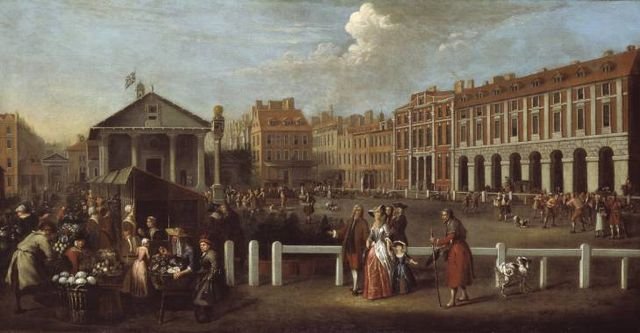
The crowd was a bustling, shoulder-to-shoulder mass. The salty, fishy smell of the catch spilled out from open wooden crates lining the street.
Arna squeezed between two housewives and, after a moment of deliberation, chose a fishmonger who looked a bit fierce.
“I want to sell these fish,” Arna said, holding up the bucket. “How much are they worth?”
The burly fishmonger grunted skeptically. “Where’d you get these?”
He stared into the bucket. Inside were several eels and perch, only medium-sized and not particularly plump.
“The River Thames3,” Arna replied, not forgetting to step forward a bit to guard against the red dots labeled ‘Thief’ that were approaching. “Caught less than two hours ago.”
The fishmonger eyed the young man appraisingly. Though he didn’t look like an experienced angler, the fishmonger couldn’t be bothered to care where the fish came from and casually named a price.
“Sixteen shillings and eight pence,” he said, reaching in to poke at the fish. He clicked his tongue. “Fresh enough, but pitifully small. And the market’s full of better than this.”
Arna froze for a second.
A trade panel popped up, but with no price suggestion. It seemed this was the haggling phase, a chance to perform some operations to raise or lower the price.
So the question was, how to haggle?
Why doesn’t this game have a haggling minigame? The kind where you just pick a couple of icons and start rambling until the other person offers more money. Last time, that ticket inspector NPC just quoted a price automatically.
She glanced at her bucket. The fish inside were flopping about, looking to be in excellent condition.
…One of them even slapped me in the face on the riverbank just now.
If nothing else, they’re at least not low-intelligence! That’s worth a bonus!
“That’s too little, not enough,” Arna said dryly. “A little more?”
“Take it or leave it.” Seeing that he didn’t know how to haggle, the fishmonger glared at him fiercely, the heavy flesh of his face trembling. “If you’re not selling, then scram. Don’t block my stall.”
Arna: …Haggling failed!
She scratched her head and tried to say something else to ease the tension. “Lovely weather today, isn’t it?”
A sturdy woman at the next stall overheard their conversation and let out a laugh.
She wiped her hands on her stained apron and joined the somewhat awkward exchange. “You’re not from around here, are you?”
She winked, flashing a grin. “You can get a better price at the taverns near the docks, young man. The cooks there will use anything for their chowder, so long as the fish don’t wriggle when they’re thrown in the pot. Remember to tell them Molly sent you.”
The fishmonger frowned at her sudden interruption and her not-at-all-funny joke, but he didn’t say much, just crossed his arms and waited for the young country lad to make his choice.
Sandwiched between Fishmonger NPC #1 and Fishmonger NPC #2, Arna shrank a little, then a little more.
I have to choose? Me?
But she needed to free up time for the factory later and was in a hurry to sell the fish and get back to Baker Street. Going to a tavern now would mean at least another half-hour delay.
But if I don’t earn the extra money, I’ll be sitting up in bed at night thinking about it!
What a dilemma.
Just then, a well-dressed woman stopped by the stall, wrinkling her nose at the faint fishy smell in the air.
“Are these from the Thames?” she asked, glancing down at the fish in the bucket.
A big client! She looks much richer!
Arna’s eyes lit up, and she nodded. “That’s right.”
She eagerly jiggled the bucket. The fish scales shimmered faintly in the sunlight. The crowded fish were jostled about, and one of them managed a weak flick of its tail, splashing a few droplets of water and looking delightfully fresh.
The wealthy woman studied them for a moment, then nodded decisively.
“I’ll take them all,” she said. “I happen to be entertaining guests this evening.”
She named a price nearly double the fishmonger’s, which made his lips curl down and his eyebrows twitch.
Arna nodded quickly, then watched with wide eyes as the wealthy lady opened her purse, counted out several coins into her palm, and had the silent maidservant behind her take the bucket.
Seeing the young man’s simple and honest appearance, just quietly waiting for her to pay—so unlike those swindlers who would try to cheat her out of a sum by haggling over everything from exotic sentiment to God Save the Queen—the lady who bought the fish shook her head with some amusement.
She added, “If you have fish of the same quality next week, deliver them directly to the kitchen door at 26 Bruton Street4, before seven o’clock.”
With that, she turned and left.
The fishmonger whose sale had been snatched away muttered curses under his breath, spitting out a stream of crude words that Arna didn’t understand at all. Molly, the sturdy woman at the next stall, just cackled.
“Looks like you found a good buyer, lucky one,” she said with a grin. “But be careful. The cats on Bruton Street are fatter than the servants!”
Returning to the residence on Baker Street, Arna first took the fish from her inventory and put them in a bucket in the kitchen, adding half a basin of water.
Once everything was settled, she climbed the creaky old stairs.
Holmes, dressed in a grey-blue dressing gown, was leaning against the sofa, his eyes closed as he drew the bow across his violin with intense concentration.
When the door opened, he abruptly stopped his strange performance, bringing the melody that had been alternating between melancholy and cheerful to a complete halt.
His sharp gaze swept over Arna’s muddy boots and the fishing rod on his shoulder, and a knowing smile appeared on his face.
“Behold, our diligent angler returns victorious!” he announced, cheerfully setting his beloved instrument aside. “Your aunt left your porridge by the hearth. It should still be warm—though I must warn you, Watson insisted on adding some so-called ‘medicinal’ honey to the bowl before it was served.”
Arna: “…Wait, what’s medicinal honey?”
Does such a thing even exist? If Doctor Watson believes it does and has spent money on it, he’s definitely been scammed.
Watson was at the dining table, having his meal. He had been called out on an emergency visit to a nearby patient yesterday and had woken up rather late. He was still spreading butter on his toast.
He looked exasperated by Holmes’s fabrication.
“Good heavens, it’s not medicinal honey, just ordinary honey,” he said wearily. “It’s to aid digestion, Holmes. If you ate breakfast like a civilized person, you would know that…”
Holmes waved a dismissive hand. “No, no. The slightest bit of food in my stomach stops my thought process. Not today, Watson. We have to go out.”
He sat down in a chair and turned to Arna. “Let me guess—a great triumph?”
“Oh, really?” Watson said, playing along and waving his toast. “It seems our lunch is sorted! A large perch, I presume?”
“Something like that,” Arna said, having changed her shoes. She collapsed into her seat and began to eat her porridge. “An eel and a perch.”
The warm porridge slid down her throat. She let out a comfortable sigh, watching her depleted stamina bar rise section by section.
“Two of them? You must have been the fishing champion of Yorkshire,” Watson said solemnly. “As a fellow who fails nine times out of ten, it seems I must ask you for some pointers…”
“Two,” Holmes said languidly. “No, no, Watson. You have been misled by Aisas’s modest account.”
He gestured with his hand and poured himself a glass of water. “At least nine, I should think. Some of which were sold.”
Watson, who was in the middle of eating his porridge, choked violently and began to cough.
When he recovered, he said in disbelief, “Good heavens, really? You’ve already started turning a profit?”
“Ah, yes,” Arna replied. Her stamina now fully restored, she sighed in relief and placed her bowl back on the tray. “I have urgent business. I’m heading out.”
She ran downstairs as if she had wind at her heels, then remembered something and turned back.
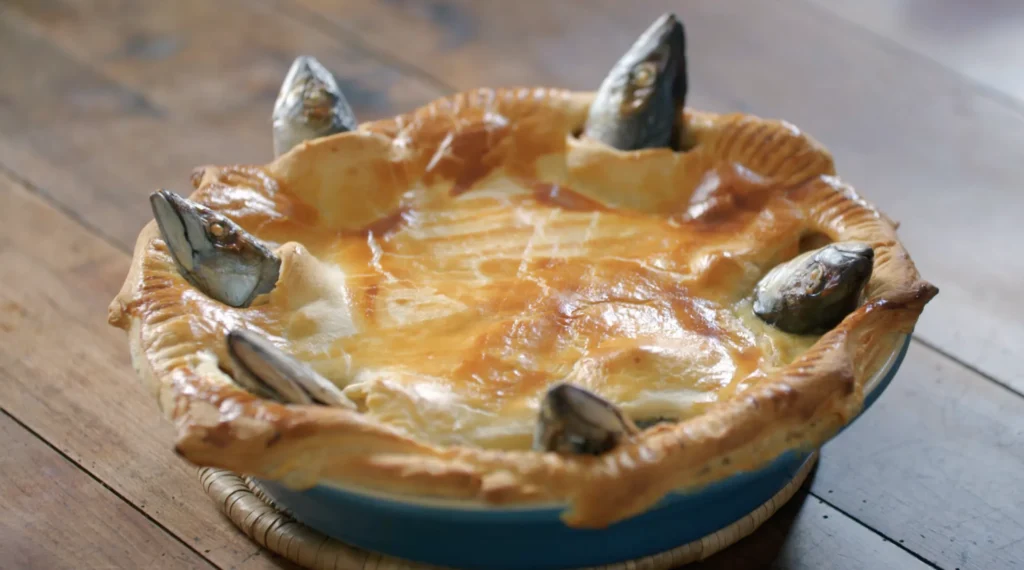
“If my aunt is going to cook those two fish,” she instructed her two housemates gravely, terrified that her fish would appear on the dinner table as a miserable sight, with their eyes turned to the heavens, gazing at the stars5, “she must wait for me to get back.”
The author has something to say:
I was chatting with a friend, and when we talked about British food, my friend complained to me for half an hour about how bad it is… including fish and chips (yes, even fish and chips; she said there are several kinds, but she couldn’t get used to any of them).
For it to be that bad and still have seagulls trying to steal it—those seagulls are too much! points accusingly.jpg
- I made up the price for the fish. It was too hard to find sources… I referenced the general price levels of the time, so I hope it’s not too outrageous.
- Covent Garden was a small market where common people sold seafood at the time.
- Bruton Street is in London’s West End, the birthplace of Elizabeth II.
- Honey is often used as a seasoning in British recipes, like in tea, honey-glazed wings, and cocktails. It’s considered to have high nutritional value.
- I probably don’t need to explain Stargazy Pie, do I? (averts eyes) Its official name is Cornish Stargazy Pie.
Footnotes
- The Bethlem Royal Hospital, nicknamed 'Bedlam,' was a notorious psychiatric hospital in London, and its name became a general term for chaos and madness.
- Covent Garden was a famous fruit, vegetable, and flower market in London's West End. In the 19th century, it was a sprawling, chaotic, and vital center of trade for common Londoners.
- The River Thames is the main river that flows through London.
- Bruton Street is located in Mayfair, a very affluent area in the West End of London. The author's note points out that it is the birthplace of Queen Elizabeth II, underscoring its prestigious location.
- A reference to Cornish Stargazy Pie, a traditional British dish from Cornwall. It is a savory pie with fish (often pilchards) baked into it, with their heads poking out through the crust as if 'gazing at the stars.'
0 Comments